Early childhood is a phase where physical movement and learning develop together. During this stage, children rely heavily on hands-on activities to understand their surroundings and gain control over their bodies. One of the most effective tools that support this process is toys. From simple blocks to interactive play items, toys play a direct role in shaping physical abilities. Understanding how toys help kids in early education gives parents and educators clarity on why play-based learning is necessary during early years. Motor skill development is not accidental—it is built through repeated movement, practice, and guided play.
Lifestyle, 25-30M, App, Boy, Child, Female, Girl, Male, Person, Play
Understanding Motor Skills in Early Childhood
Motor skills refer to a child’s ability to control and coordinate body movements. These skills are generally divided into two types: fine motor skills and gross motor skills. Fine motor skills involve smaller movements such as gripping, stacking, or turning objects. Gross motor skills involve larger body movements like crawling, walking, jumping, or pushing.
During early learning stages, children develop these skills rapidly. Any delay or lack of practice can affect physical confidence and learning readiness. Toys provide repeated opportunities for movement in a controlled and safe manner, allowing children to practice these skills naturally through play.
Role of Toys in Fine Motor Skill Development
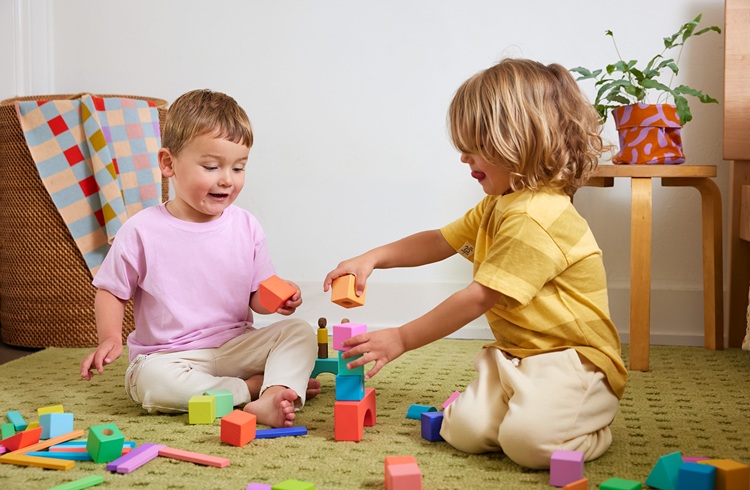
Fine motor skills develop when children use their hands and fingers in a controlled way. Toys that involve grasping, pressing, twisting, or fitting pieces together support this process effectively. Examples include building blocks, shape sorters, puzzles, beads, and simple craft tools.
When a child picks up a block or places a puzzle piece into a slot, the hand muscles strengthen gradually. These actions improve grip strength, finger control, and hand-eye coordination. Over time, this helps children perform daily tasks such as holding a pencil, turning pages, or buttoning clothes.
Repetition is key here. Toys allow children to repeat the same movement without feeling pressured, which is why they are effective learning tools during early education.
Role of Toys in Gross Motor Skill Development
Gross motor skills involve the use of larger muscles in the arms, legs, and torso. Toys that promote movement encourage children to use their full body. Examples include push toys, ride-on toys, balls, climbing toys, and pull-along items.
These toys help children practice balance, posture, coordination, and strength. For instance, pushing a toy across the floor helps improve walking stability, while throwing and catching a ball supports arm coordination and spatial awareness.
Such activities also help children understand body control and movement direction. As children grow, these skills form the base for physical activities such as running, jumping, and participating in group play.
Improving Hand-Eye Coordination Through Play
Hand-eye coordination develops when children learn to process visual information and respond with physical action. Toys that involve aiming, stacking, inserting, or matching shapes help build this skill.
For example, placing rings on a peg or stacking cups requires children to judge distance and position. These activities help improve visual tracking and timing. This coordination becomes essential later for tasks such as writing, drawing, and using learning tools in a classroom setting.
Toys support this development by offering immediate feedback. If a piece does not fit, the child adjusts their movement and tries again. This trial-and-error approach strengthens both coordination and problem-solving skills.
Building Muscle Strength and Control
Motor development is closely tied to muscle strength. Toys that require lifting, pushing, squeezing, or pulling help build muscle control gradually. Simple actions such as squeezing soft toys or pulling toys along a string engage multiple muscle groups.
As muscle strength improves, children gain better posture and movement control. This supports longer periods of sitting, standing, and focused activity, which are necessary during early learning sessions. Toys make this process natural by blending physical effort with enjoyment.
Supporting Independence and Confidence
As children master physical tasks through toys, they gain confidence in their abilities. Completing simple actions like stacking blocks or riding a toy independently builds a sense of achievement.
This confidence encourages children to try new activities without fear of failure. In early education, physical confidence often supports emotional and social growth as well. Children who feel comfortable with movement are more likely to participate in group activities and learning games.
Choosing Toys That Support Motor Skill Growth
Not all toys contribute equally to motor development. Toys that require active involvement are more effective than passive ones. Items that need children to touch, move, assemble, or interact physically provide better learning value.
Age-appropriate toys are important. Toys that are too easy may not challenge the child, while overly difficult ones can cause frustration. Simple progression—from basic grasping toys to more movement-based toys—supports steady development.
Conclusion
Toys play a direct role in shaping motor skills during early learning stages. Through repeated physical interaction, children strengthen both fine and gross motor abilities in a natural and engaging way. Understanding how toys help kids in early education allows parents and educators to make better choices that support physical growth alongside learning. When children are given the right toys and space to play, motor development becomes a steady and enjoyable process that supports overall early childhood development.

 Techasting